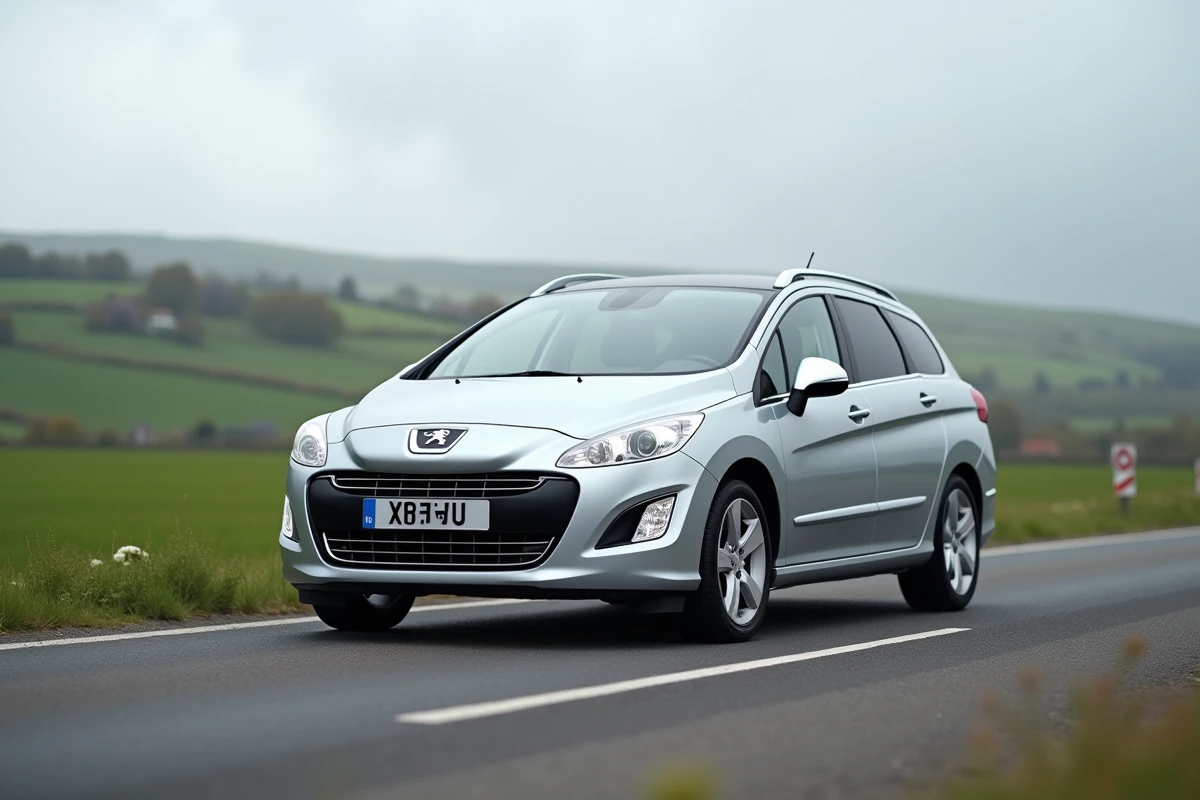
The third-generation Peugeot 308 SW measures 4.64 meters in length and has a generous wheelbase that provides a trunk capacity of 608 liters under the shelf. These dimensions place Peugeot’s compact estate at the top of segment C, but they conceal rear passenger space constraints that the technical specifications do not reveal, especially for families needing to install multiple child seats.
Three Isofix seats in the 308 SW: the configuration that the specs ignore
The rear bench of the 308 SW features two Isofix anchorage points in the outer seats and a third Top Tether attachment point in the center seat. In theory, three child seats can coexist. In practice, the interior width at the elbows, limited by the door trims and the central tunnel, makes this operation risky.
We regularly observe that two wide shell car seats (like the Cybex Sirona or Joie Spin) occupy nearly the entire bench. A third child seat only fits as a narrow booster, and even then, only if you choose a model without side armrests. For a family with three young children needing three Isofix shells, the 308 SW is simply undersized.
To get a complete overview of the dimensions and compare with the sedan, we recommend checking the dimensions of the Peugeot 308 SW on Coups de Net before heading to the dealership.
The ADAC comparative study “Familienwagen 2026” also highlights that the 308 SW loses headroom for passengers over 1.85 m compared to the Volkswagen Golf Variant. This deficit is even more noticeable when child seats raise the sitting position of the children, bringing their heads closer to the roof.
Trunk volume and loading threshold: beyond the announced liters
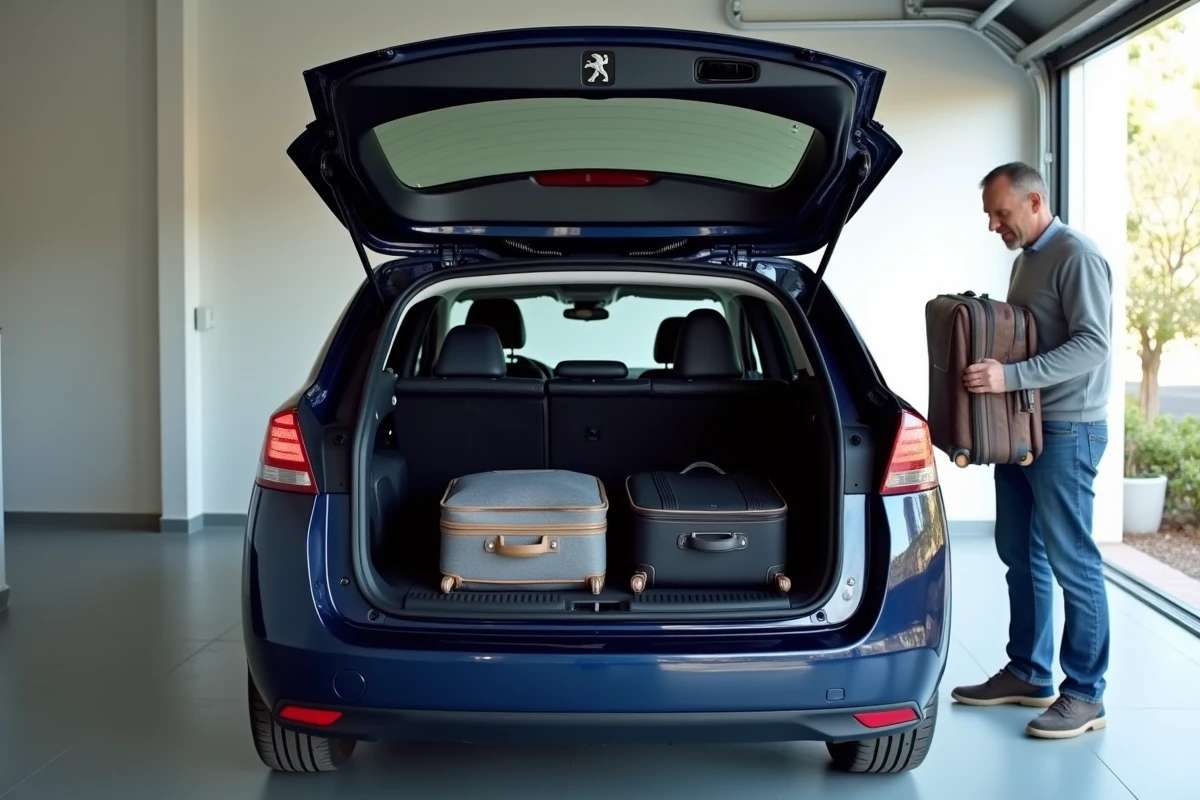
The 608 liters claimed by Peugeot correspond to a volume measured according to the VDA standard, with the bench in place. This figure, flattering on paper, deserves to be nuanced by the shape of the compartment and the height of the loading threshold.
The trunk floor is not flat once the bench is folded down. A drop of several centimeters appears at the junction between the folded backrest and the bottom of the trunk. Long objects (double stroller, skis) hit this step, reducing the useful loading length.
The loading threshold, located relatively high above the ground, complicates loading heavy items. Competing estates like the Skoda Octavia Combi or the Toyota Corolla Touring Sports offer a lower threshold, making daily handling easier.
- Bench folded in a 60/40 configuration, not in 40/20/40: modularity remains limited for loading a long object while keeping a rear seat
- Shallow storage underfloor, sufficient for a first aid kit but not for a charging cable on the plug-in hybrid version
- Absence of floor fixing rails on the Active Pack and Allure trims, available only from the GT trim onward
Headroom and rear passenger space of the 308 SW by trim
The exterior height of the 308 SW, kept low for aerodynamic and styling purposes, results in tight rear headroom. Passengers over 1.80 m feel a closeness to the roof as soon as they sit up straight.
The chosen trim directly influences the perceived space. The GT and GT Pack versions include a panoramic sunroof that reduces headroom by about two centimeters compared to trims without a glass roof. For intensive family use with teenagers or adults in the back, we recommend opting for an Allure trim without a panoramic roof.
Legroom in the second row
The wheelbase of the 308 SW benefits the trunk more than the rear passengers. Knee space remains adequate for urban trips, but long journeys with two adults in the back highlight a lack of legroom, especially if the driver pushes their seat back beyond the mid-position.
The Peugeot i-Cockpit, with its compact steering wheel and low driving position, encourages the driver to bring their seat closer to the wheel, freeing up a few extra centimeters for the rear row. This gain is not insignificant: it can make the difference between a child seat touching the driver’s backrest and a seat properly installed with the required safety space.
Mechanical reliability and suspension: what the dimensions don’t say
The generous dimensions of the 308 SW imply a curb weight higher than that of the sedan. This additional mass puts more strain on the running gear, a point confirmed by the annual “Reliability 2026” survey from Automobile Magazine: more than 20% of surveyed owners report premature wear of the suspension bushings on degraded roads.
This observation primarily concerns the plug-in hybrid versions, whose battery adds weight to the rear axle. On thermal engines like the 1.5 BlueHDi 130, the phenomenon is less pronounced but not absent. A visual inspection of the bushings at the second service seems reasonable to anticipate replacement.
- The plug-in hybrid (PHEV) version adds significant weight that increases the strain on the suspension links
- The 1.5 BlueHDi 130 benefits from the deferred extension of the Euro 7 standard, allowing it to be marketed until 2027 without engine redesign
- The GT trims include larger diameter wheels that reduce the thickness of the tire sidewall and increase the transmission of road irregularities to the bushings
The 308 SW remains an attractive compact estate with its style and trunk volume, but its interior dimensions impose clear compromises for large families. Checking the compatibility of your car seats at the dealership, with the exact models you use, avoids unpleasant surprises after purchase. The choice of trim and engine type weighs as much as the raw dimensions on real daily comfort.