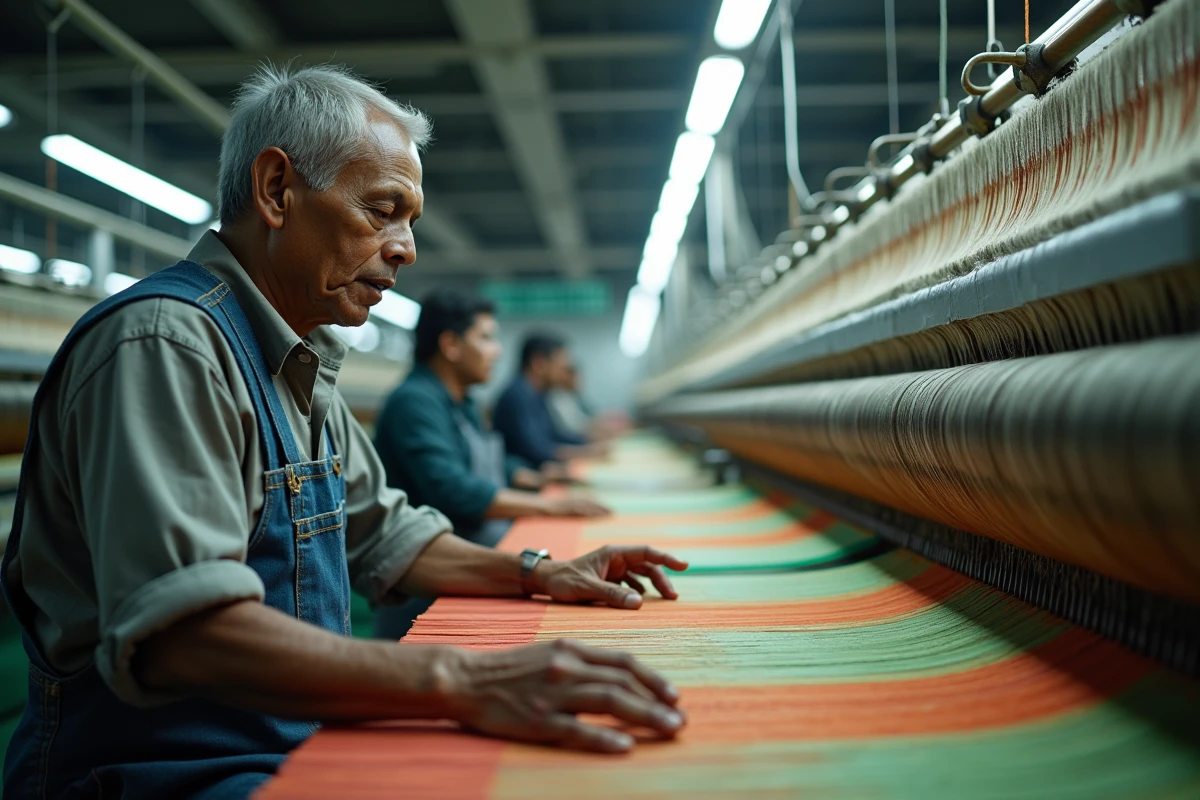
The global textile market was estimated at $1.83 trillion by 2025 according to Research Nester, with projections exceeding $4.66 trillion by 2035. Behind these volumes lies a geography of production that is not simply a fixed podium. The textile industry is reorganizing around regional specializations, new raw materials, and upgrading strategies that are reshuffling the cards between continents.
Industrial hemp and African cotton: the raw materials reshuffling the textile rankings
The usual rankings of textile-producing countries are based on the volume of exported garments. This perspective masks a recent phenomenon: the recomposition of leaders according to the type of fiber.
The global market for industrial hemp, valued at over $11 billion by 2025 according to Fortune Business Insights, concentrates its capacities in North America, Europe, and China. These areas do not all appear in the traditional rankings of cotton or polyester, creating a gap between the map of mass production and that of textile innovation.
Meanwhile, West Africa is rising in the upstream chain. Mali and Benin each represent about 3% of global cotton exports, according to data compiled by Accio. This figure may seem modest, but it positions these countries as structural suppliers, not marginal ones. To delve deeper into the ranking of countries in textiles, these emerging players must now be integrated into the analysis.

China, India, Bangladesh: what Asian dominance hides in terms of disparities
The Asia-Pacific region is expected to account for about 52% of the global textile market by 2035, according to Research Nester. This figure aggregates very different realities.
China remains the largest exporter of textiles and garments by volume. Its production apparatus covers the entire chain, from synthetic fiber to finished product. India occupies a distinct position, supported by an ancient cotton tradition and an abundant workforce. Bangladesh, on the other hand, has specialized in low-cost manufacturing for Western brands.
The available data do not allow for a conclusion of a uniform trajectory for these three countries. China is investing in automation and upgrading, which could reduce its competitiveness in the entry-level segment. Bangladesh is facing increasing pressures regarding working conditions and environmental standards. India is trying to capture a share of the technical textiles market, a growing segment.
- China dominates the production of synthetic fibers and technical fabrics, with a vertically integrated industrial apparatus.
- India stands out for its cotton production and capabilities in upholstery textiles and artisanal embroidery.
- Bangladesh remains the second-largest global exporter of manufactured garments, heavily reliant on European and American orders.
French and European textile industry: luxury, know-how, and real economic weight
In France, the fashion and clothing sector represents a turnover of about €150 billion, encompassing production, distribution, export, and e-commerce. This macroeconomic weight places France among the major players in the global textile market, but on a very different register than that of Asian countries.
The French positioning relies on luxury and high-value-added brands. French companies in the sector do not compete on mass production volumes. They capture value through design, distribution, and branding. Italy follows a similar logic, with an industrial fabric of SMEs specialized in knitwear, leather, and high-end finishes.
The rest of Europe is divided between countries with a textile tradition in industrial decline (United Kingdom, Belgium) and more recent subcontractors (Portugal, Turkey, Romania). Turkey, in particular, plays a pivotal role between Europe and Asia, with significant capacities in denim and cotton.
- France and Italy dominate the luxury textile segment, with globally recognized brands and protected artisanal know-how.
- Portugal and Turkey serve as nearby production bases for European brands looking to reduce delivery times.
- European environmental regulations (notably the anti-fast fashion law in France) push the sector towards more sustainable models, altering competitiveness criteria.
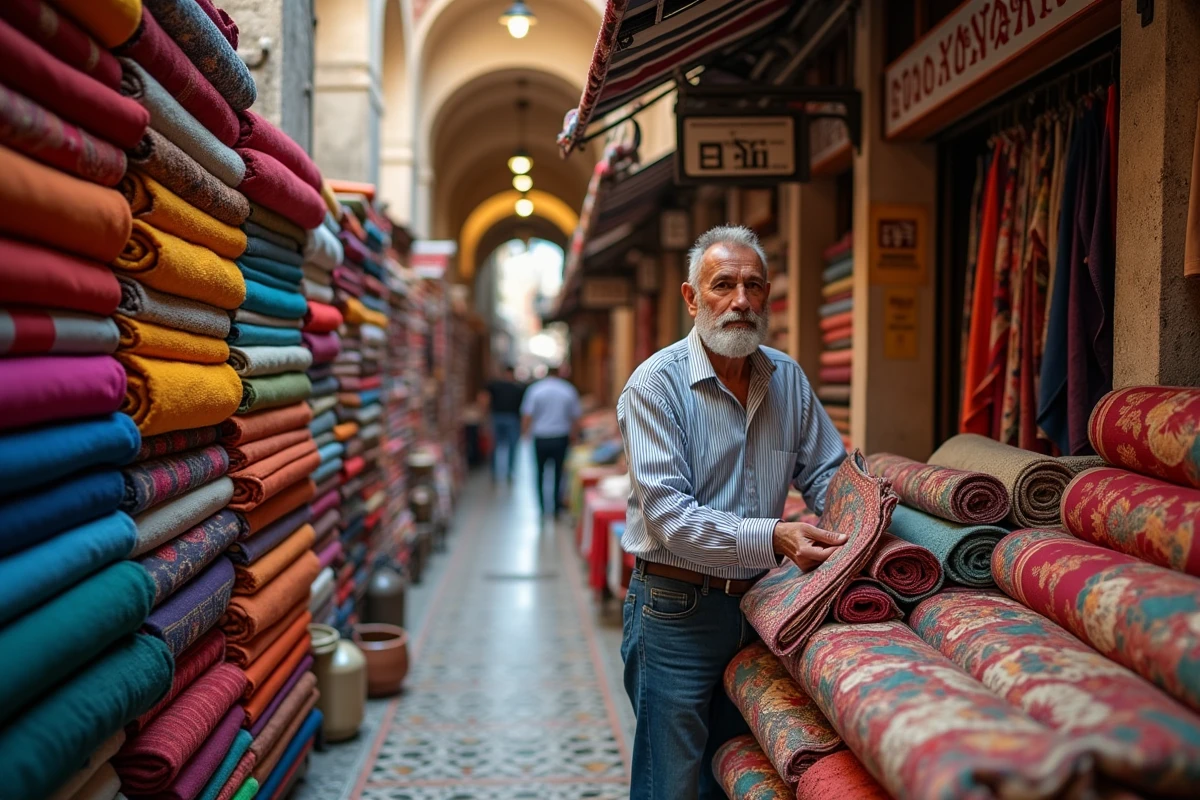
Sustainable textiles and regulation: the criterion that changes the ranking of producing countries
International textile rankings have traditionally been based on exported volumes or revenue. One criterion is gaining strength: compliance with environmental and social requirements.
Growing urbanization and population growth in developing countries remain the main drivers of textile demand. In contrast, environmental regulations are reshuffling trade flows. A producing country that does not meet the standards imposed by importing markets (fiber traceability, limitation of chemical discharges, working conditions) risks losing market share, regardless of its production costs.
The development of e-commerce accentuates this trend. With over 59% of the global population connected to the Internet and retail e-commerce exceeding trillions of dollars, consumers have direct access to information about the origin and manufacturing conditions of textile products. Transparency becomes a measurable competitive advantage for countries that integrate it into their supply chain.
The ranking of leading countries in the textile industry in 2024 can no longer be read along a single axis. Specialization by fiber, positioning in range, regulatory capacity, and access to digital markets form a set of criteria that makes any linear hierarchy reductive. The countries that progress are those that combine volume, quality, and compliance, not those that rely on a single lever.