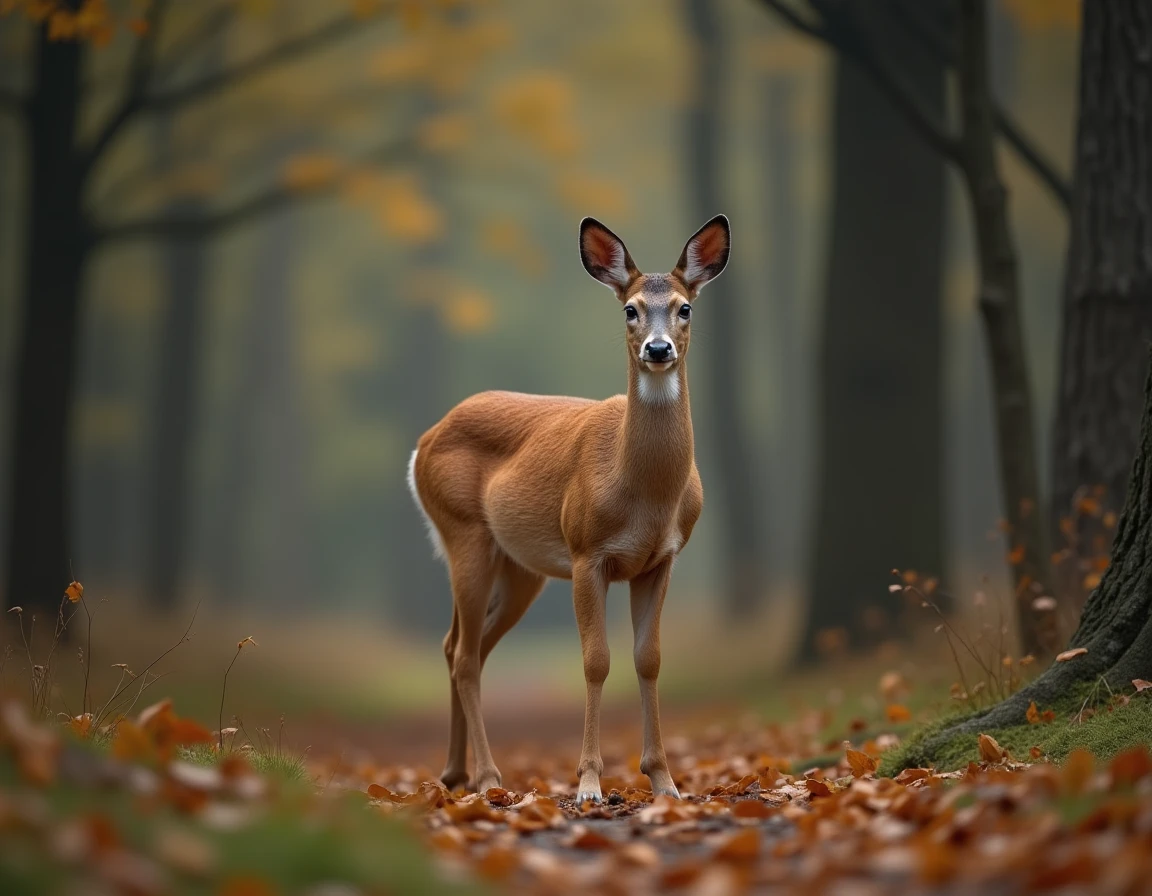
We walk in the forest, following a path in the early morning, and a doe appears between the trees. Motionless, she stares at us for a few seconds before disappearing. Encountering a doe almost always provokes the same reaction: a sudden stop, an inner silence, a feeling that this moment carries a particular significance. Before seeking symbolic grids or divinatory interpretations, we can examine what this encounter reveals about our own psychological state.
The doe as a mirror of an emotional state
When we observe a doe frozen in the light of a thicket, we spontaneously project something of ourselves onto this animal. Her posture – ears perked, body tense, ready to flee – closely resembles a state of hypervigilance that many experience daily.
In several modern symbolic readings, a fearful or frozen doe reflects a state of excessive vigilance. Chronic anxiety, difficulty feeling safe in a social or professional environment, the constant need to control one’s surroundings: all of this resonates with the natural behavior of the doe.
Those interested in the meaning of encountering a doe will often find this psychological reading subtly underlying spiritual interpretations. The message attributed to the doe, from this perspective, becomes a concrete invitation: to let down one’s defenses and seek a more secure environment.
Rather than stopping at the symbol, we can use this encounter as a trigger for introspection. The useful question is not “what omen does the doe send me,” but “why does this alert animal resonate with me so much right now.”
Doe, stag, and fawn in dreams: distinct messages
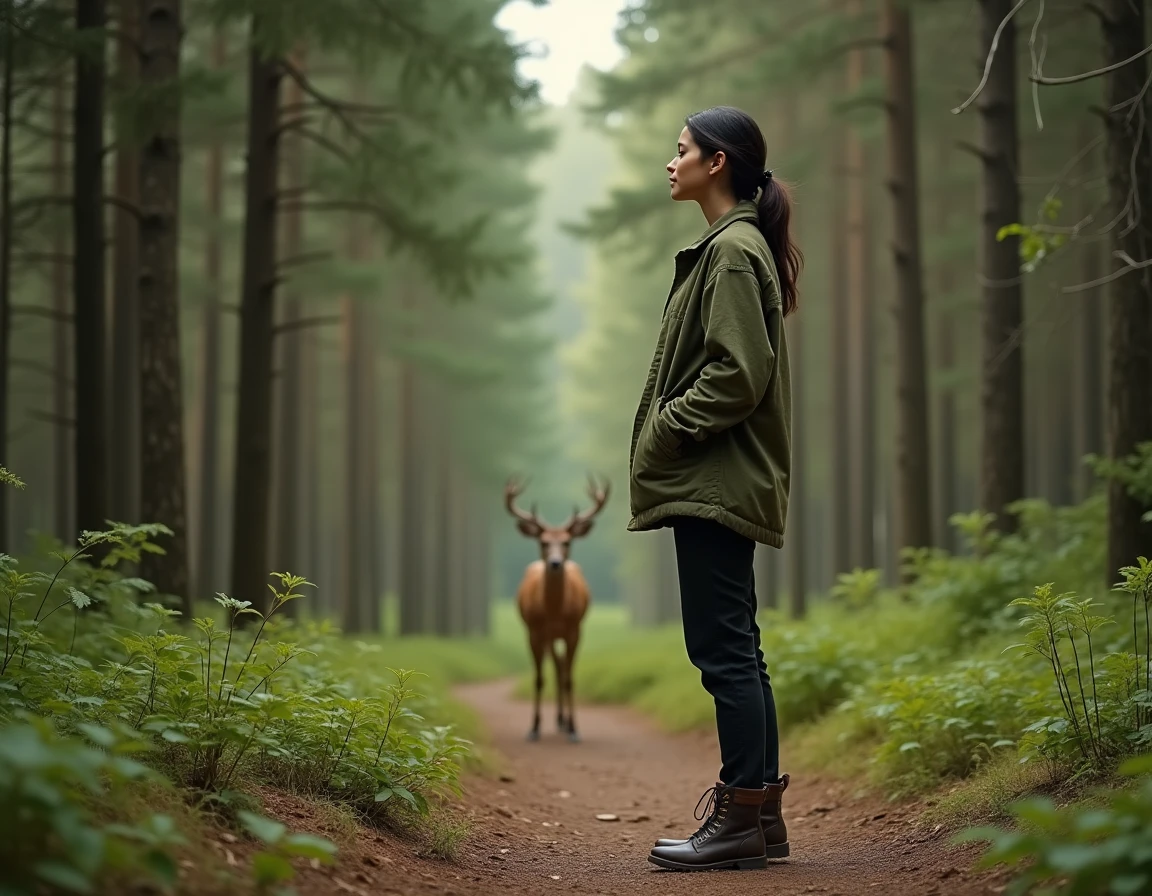
Recent esoteric approaches emphasize a distinction that general articles often overlook. Doe, stag, and fawn do not carry the same symbolic message, even in dreams.
- The doe refers to protective softness and the need for care, a form of nurturing or attention directed towards others (or towards oneself when it is lacking).
- The stag evokes strength, independence, and regeneration, a more affirmative energy related to the ability to rise after a trial.
- The fawn symbolizes embraced vulnerability, the part of oneself that needs to be protected without shame.
- When doe and stag appear together, the common interpretation sees it as a call to balance masculine and feminine energy in one’s inner life.
In practice, noting dreams involving these animals and rereading them after a few weeks allows for the identification of recurring patterns. A therapist trained in symbolic analysis can help decode these patterns in the context of work on anxiety or defense mechanisms.
Inner quest and Christian tradition: Psalm 42
The symbolism of the doe is not limited to esoteric currents. In the Christian tradition, the verse “As a doe longs for streams of water” (Psalm 42) associates this animal with a deep spiritual thirst.
This image is increasingly reinterpreted in contemporary circles as an invitation to nourish one’s inner life. The doe seeking water represents the part of oneself that seeks meaning, coherence, and grounding. Reactions vary on this point: some see it as an explicit religious call, while others view it as a universal metaphor for the need for renewal.
What makes this reference practically useful is that it shifts the subject. We move from the omen (“the doe announces something to me”) to the personal question (“what am I seeking right now, and am I giving myself the means to find it”).
Integrating the sign of the doe into therapeutic work
Many people questioning the spiritual meaning of the doe are going through a transitional period: career change, breakup, grief, exhaustion. The totem animal then becomes a projective support, a foothold for articulating what is at play.
Using the encounter as a tool for introspection
This experience can be transformed into a concrete exercise. Noting what you felt physically at the moment of the encounter (tension in the jaw, breath caught, feeling of calm) provides insights into your actual nervous state. The body reacts to the doe as it reacts daily: in alert mode or in calming mode.
Three avenues to explore this encounter beyond symbolic interpretation:
- Write down the scene in a journal, describing your bodily sensations rather than the supposed “message” of the animal.
- Discuss it in therapy or sophrology sessions to explore what the softness and vulnerability of the doe activate in terms of emotions.
- Observe if the encounter comes back to mind in the following days, and in what stressful situations it resurfaces.
Softness and vulnerability: qualities to rehabilitate
The doe embodies a form of sensitivity that our culture too quickly associates with fragility. In reality, the softness of the doe is an effective survival mechanism: discretion, intuition of danger, ability to flee without unnecessary confrontation. Transposed to human life, this strategy corresponds to what psychology calls adaptive avoidance resources.
Encountering a doe can remind us that constant vigilance has a cost. The animal that remains frozen too long exhausts itself. The one that flees at the right moment preserves itself. The true message of the doe may lie here: knowing when to let down one’s guard.
The next time a doe appears on a path or in a dream, before seeking an oracle or a symbol dictionary, we can simply ask ourselves what we were fleeing that day, and whether that flight is still serving any purpose.