
On a Renault Clio 2, the anti-theft system relies on several electronic modules distributed throughout the cabin and the engine compartment. Identifying the correct component before any intervention prevents wasting time on a false lead, as the failure does not always originate from the same element depending on the engine type and the phase of the vehicle.
Engine ECU and UCH on Clio 2: two units, two distinct logics
The most common confusion concerns the difference between the engine ECU and the UCH (Central Cabin Unit). These two units participate in the anti-theft circuit, but they do not play the same role and are not located in the same place.
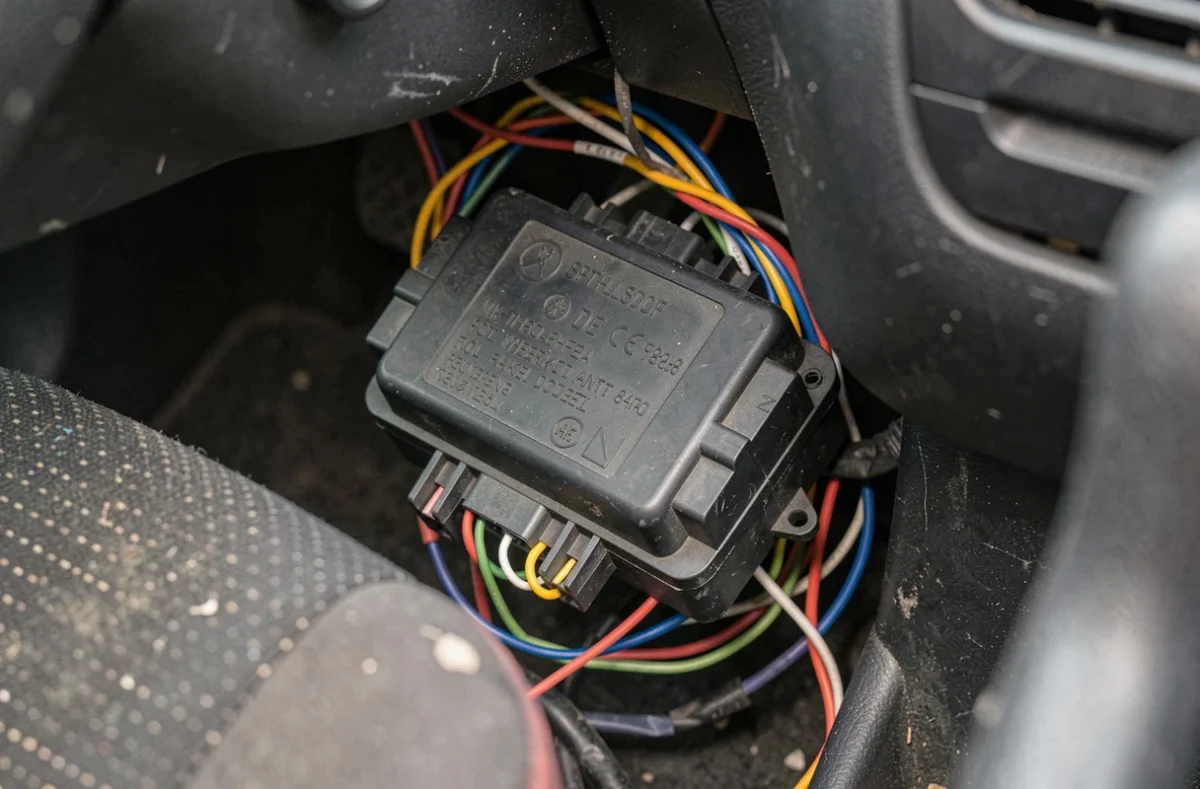
The UCH manages the initial communication with the key’s transponder. It is located under the dashboard, on the driver’s side, behind the lower plastics of the steering column. It is the one that receives the code transmitted by the antenna ring surrounding the ignition switch, then authorizes or denies the starting sequence.
The engine ECU, on the other hand, is generally located in the engine compartment or near the firewall. On the 1.2 16V phase 2 petrol engines, you often find a Magneti Marelli IAW 5NR2 ECU, while the 1.4 and 1.6 16V versions have been associated with Siemens Sirius 32 ECUs. This difference in reference changes the diagnostic path and the parts to look for.
A detailed guide allows you to locate the anti-theft unit on a Clio 2 based on the exact version of the vehicle.
Transponder antenna ring Clio 2: the forgotten link in diagnostics
The transponder reading ring is the least visible component of the anti-theft system. Wrapped around the ignition barrel (the neiman), it captures the signal from the transponder embedded in the key through magnetic induction, without physical contact.
When this ring malfunctions, the key is no longer recognized even if it is in perfect condition. The typical symptom is a rapid blinking of the anti-theft light when turning the ignition, followed by a complete refusal to start. The starter may turn normally, the engine receives the mechanical command, but the injection remains blocked due to a lack of electronic authorization.
A common trap is to confuse this symptom with a dead remote control battery. The infrared remote control (locking/unlocking the doors) and the anti-theft transponder are two separate circuits. A remote control that no longer opens the doors does not mean that the transponder is at fault. The most discriminating test remains trying the second original key supplied with the vehicle.
Anti-theft light Clio 2: what its behavior reveals
The red or orange light on the dashboard provides an initial indication, but it does not pinpoint the fault by itself. Several behaviors must be distinguished.
- A rapid blinking at the moment of ignition generally indicates a lack of reading from the transponder, which points towards the antenna ring or the key itself.
- A light that stays on while the engine starts and then stalls may signal an authorization problem between the UCH and the engine ECU, with the connection between the two modules being interrupted or corrupted.
- A blinking light with the vehicle off is the normal operation of the anti-theft system in standby mode, it does not indicate any anomaly.
Field reports vary on the reliability of this visual reading. On some older Clio 2 models, the light may exhibit erratic behavior due to a simple electrical supply issue with the UCH, unrelated to the transponder or the ECU.
When the UCH muddles the waters
A failing UCH does not only cause a refusal to start. Simultaneous anomalies in central locking, windshield wipers, power windows, or interior lighting are strong indicators. If several functions managed by the UCH malfunction at the same time as the anti-theft system, the problem is likely centralized in this unit rather than in the ring or the key.
Before removing or replacing a unit, checking the electrical supply and grounds of the UCH remains the first logical step. A poor contact on a connector can sometimes cause intermittent starting refusal.
Anti-theft diagnostics Clio 2: checks before intervention
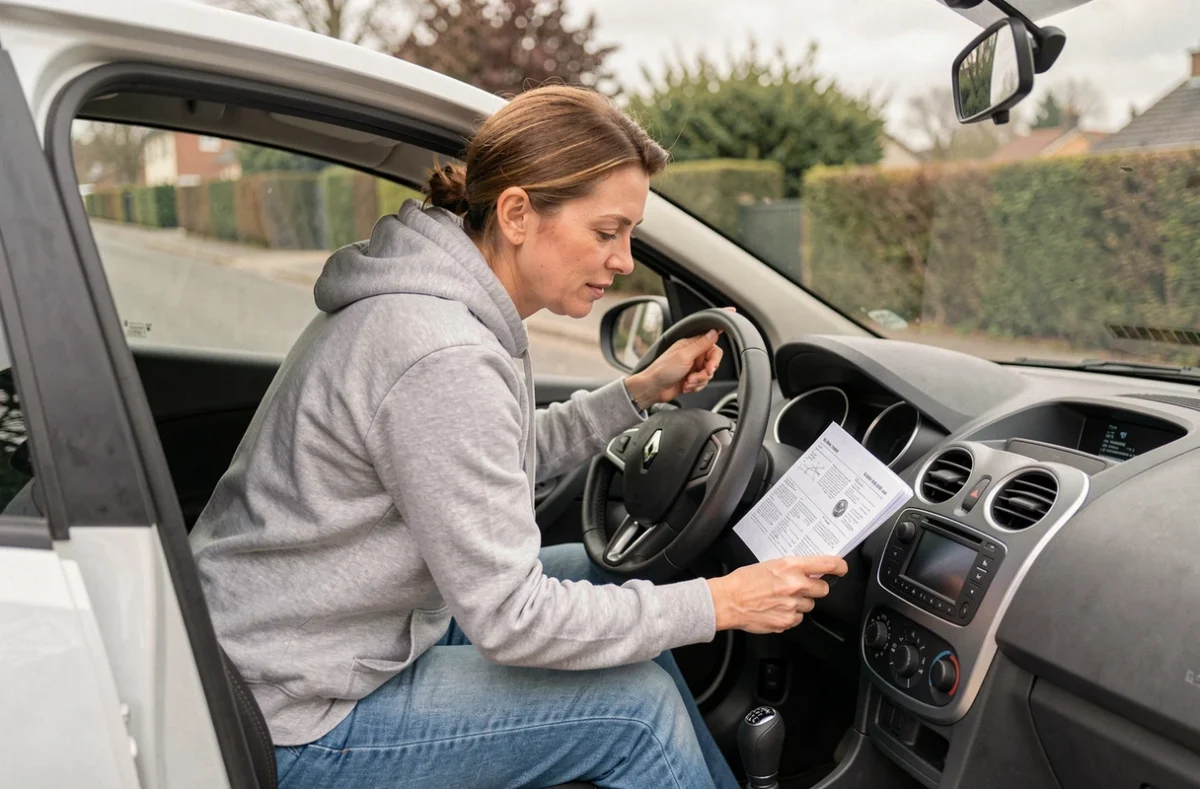
Replacing a component without prior diagnostics is the best way to spend unnecessarily. A few simple checks can help narrow down the fault area before any removal.
- Try the second original key: if the vehicle starts with the other key, the transponder of the first key is at fault, not the rest of the circuit.
- Check the fuses related to the UCH and the engine ECU in the cabin fuse box (under the steering wheel) and in the engine compartment fuse box.
- Observe if other functions managed by the UCH (lighting, windshield wipers, locking) show simultaneous anomalies.
- Check the condition of the battery: a voltage that is too low can prevent communication between the electronic modules, simulating an anti-theft failure.
A diagnostic with a compatible Renault scanner (type CLIP or a generic tool supporting the vehicle’s protocol) then allows reading the fault codes stored in the UCH and the ECU. Reprogramming a key requires a professional diagnostic tool to synchronize the transponder with the vehicle’s modules.
Phase 1 and phase 2: differences not to be ignored
The Clio 2 phase 1 (before 2001) and phase 2 (after 2001) do not always share the same UCH reference or the same type of ECU. A replacement UCH must match the exact reference of the vehicle, otherwise, you will have to reprogram the entire anti-theft system. The references are inscribed on a label stuck to the unit itself, accessible after removing the lower cover of the steering column.
On the oldest versions, the UCH reference may vary, complicating the search for compatible used parts. Checking the reference before purchasing a replacement unit avoids unnecessary intervention and a second reprogramming.