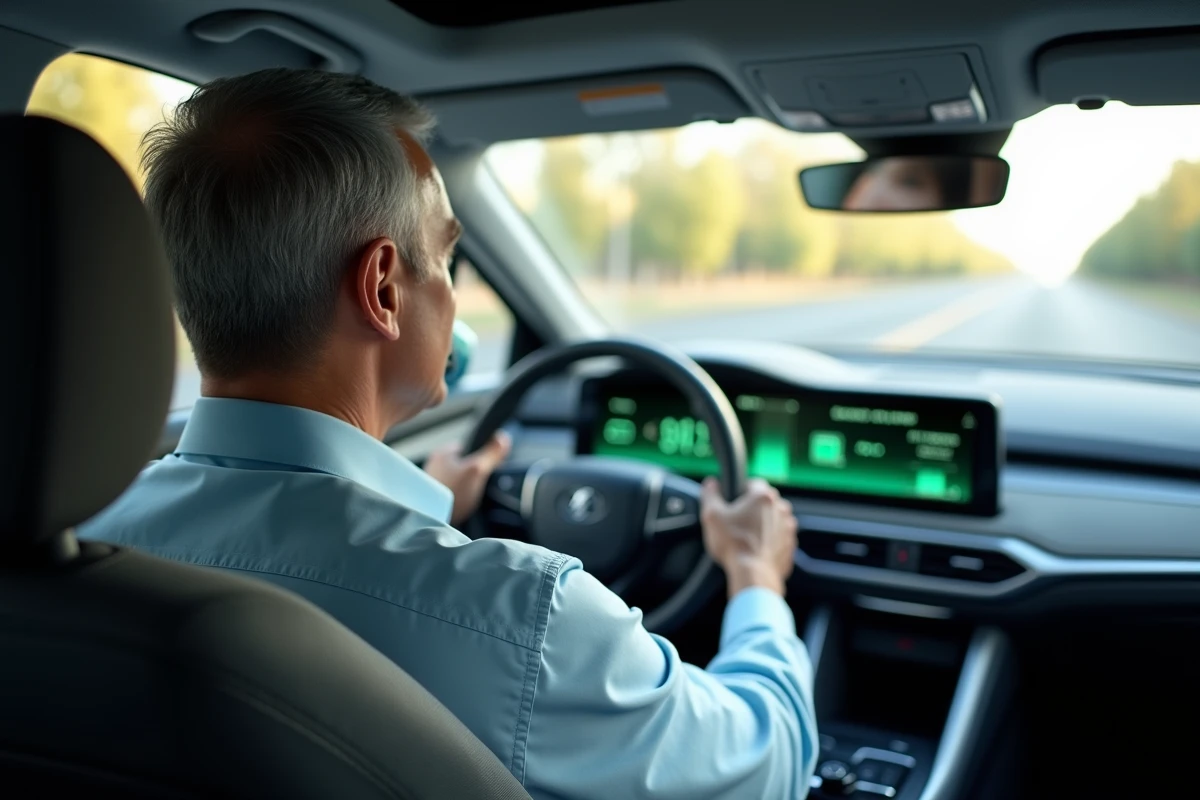
On the highway, a hybrid car operates differently than it does in the city. The internal combustion engine takes over for most of the journey, and the battery drains quickly if the driving strategy is not adapted. Optimizing hybrid driving on the highway is primarily about understanding when and how the system switches between its two powertrains to make the most of every drop of fuel.
Aerodynamics and excess weight: what hinders hybrid consumption on fast roads
Have you noticed that your hybrid shows a much higher consumption on the highway than in the city? This phenomenon is no coincidence. In urban areas, regenerative braking and stop phases continuously recharge the battery. On fast roads, these opportunities almost completely disappear.
The first factor to consider is aerodynamic drag, which increases with the square of speed. From 110 km/h, the engine’s effort to cut through the air rises disproportionately. Hybrid SUVs are particularly affected: their large frontal area penalizes them much more than a low-profile sedan.
As detailed in hybrid driving on the highway according to Pendant ce Temps, a plug-in hybrid vehicle running with an empty battery on the highway can even consume more than an equivalent combustion model. The reason is simple: the additional mass of the battery (often several hundred kilograms) becomes dead weight that the gasoline engine must drag without electrical benefit.
This observation changes the way to approach a long trip. A plug-in hybrid that is forgotten to be charged before hitting the highway loses much of its appeal. Recharging the battery before each highway departure is the first rule, not a bonus.
Speed control on the highway: not always the right reflex in a hybrid
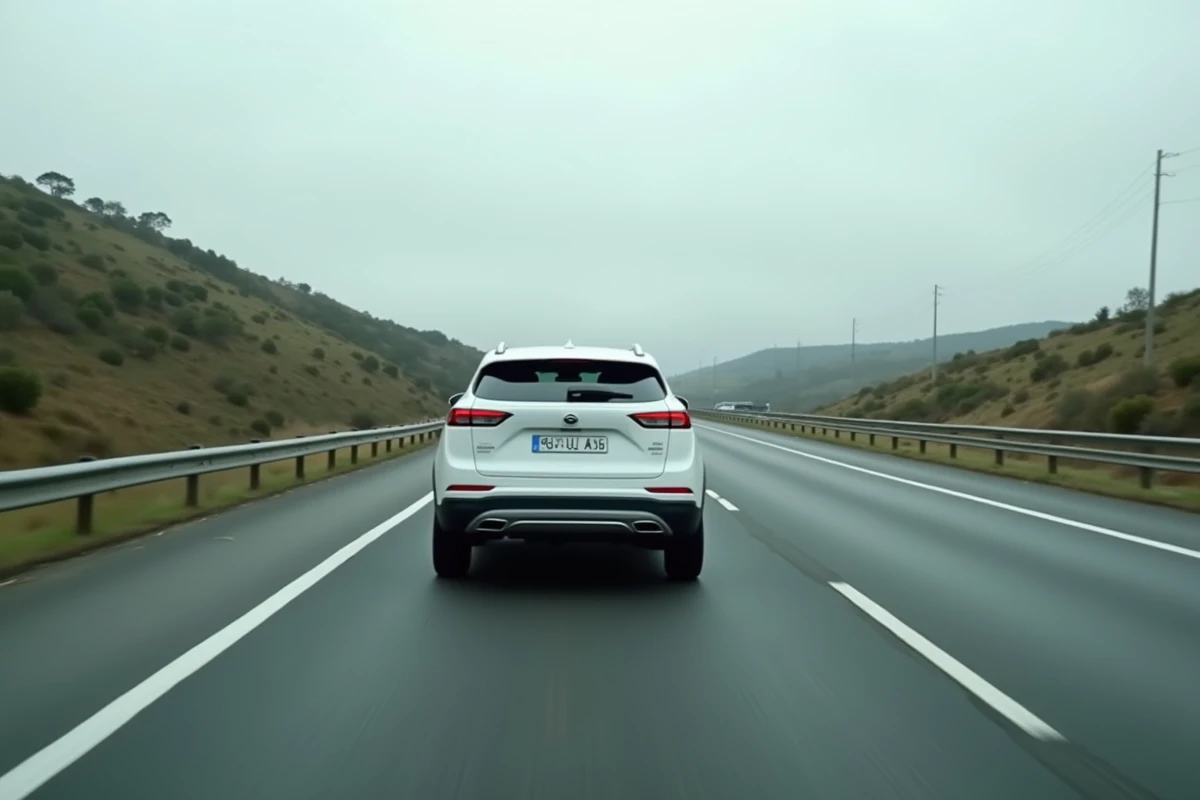
Using cruise control seems logical for maintaining a constant speed and limiting consumption. On a flat and straight stretch, it is indeed an ally. The problem arises as soon as the terrain changes.
On a hilly section, the cruise control forces the internal combustion engine to maintain speed uphill, then wastes kinetic energy downhill. An attentive driver would do the opposite: they would let the speed drop slightly uphill (a few km/h is enough) and take advantage of the descent to recover energy through regenerative braking.
- On a flat and clear highway, cruise control remains relevant to stabilize consumption and avoid unconscious micro-accelerations.
- On a hilly route, deactivating cruise control allows speed to fluctuate naturally and maximizes energy recovery phases.
- In crosswinds or headwinds, reducing the set speed by a few km/h compensates for the overconsumption linked to additional drag.
The idea is not to drive slowly, but to let the vehicle “breathe” with the terrain instead of forcing a rigid speed.
Managing the hybrid battery: the charge range that makes a difference
Many plug-in hybrid drivers apply a simple logic: empty the battery in electric mode, then switch to combustion. On the highway, this approach is counterproductive.
Keeping the battery in an intermediate charge range offers two concrete advantages. The hybrid system retains an energy reserve to assist the internal combustion engine during accelerations (overtaking, resuming speed after slowing down). And the battery itself ages better when it is not consistently pushed to its extremes.
In practice, this means using “hybrid” or “charge hold” mode rather than full electric mode as soon as entering the highway. The internal combustion engine then runs at an optimized speed, and the battery plays its role as an energy buffer instead of draining within a few dozen kilometers.
Adapting the strategy according to trip length
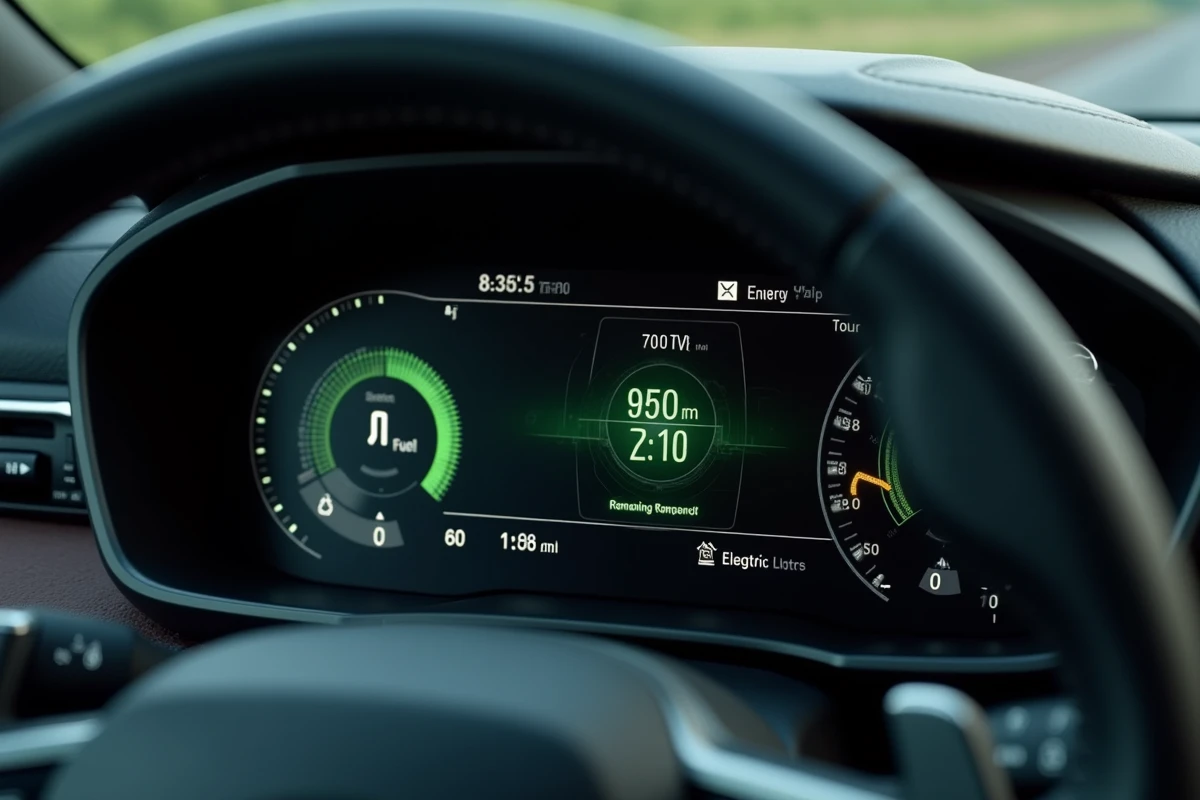
For a short highway trip (less than an hour), starting in electric mode for the first urban kilometers and then switching to hybrid on the fast road remains coherent. The battery retains enough reserve for assistance phases.
For a long trip, reserving electric charge for urban sections upon arrival is often more economical. Driving in electric mode at 130 km/h drains the battery in a few minutes, while those same kilowatt-hours will cover much more distance in the city.
Speed and hybrid fuel consumption: the threshold that few drivers respect
The difference in consumption between 130 km/h and 110 km/h in a hybrid vehicle is significantly more pronounced than in a diesel. The gasoline engine of a hybrid is calibrated for optimal efficiency at moderate speeds. Beyond that, it operates in a less efficient zone, without the battery being able to compensate.
Driving at 110-120 km/h instead of 130 km/h significantly reduces consumption, often well beyond what one might imagine. The time gain on a two-hour trip is limited to a few minutes, while the fuel savings can be measured with each tankful.
- At 110 km/h, the internal combustion engine remains within its favorable efficiency range, and the battery discharges less quickly.
- At 130 km/h, aerodynamic drag imposes a constant effort that neither the electric motor nor regenerative braking can compensate for.
- Under-inflated tires further exacerbate the phenomenon: checking the pressure before each long trip remains a simple gesture with a significant impact.
A hybrid vehicle delivers its best results when the driver is willing to moderate their highway speed. It is not a matter of deprivation, but of consistency with the onboard technology. Driving fast in a hybrid is like using an electric bike without ever pedaling: the system works, but its advantage disappears.