
Having easy and quick access to your emails is essential for staying productive. Effectively setting up your webmail on Android can transform your user experience by simplifying the management of your daily messages. By following a few simple steps, you can ensure that your emails are synchronized in real-time, that your folders are well-organized, and that notifications are configured according to your preferences.
There are many messaging apps available on Android, each offering distinct features. Taking the time to choose and set up the app that best meets your needs can make all the difference for a smooth and optimal experience.
Setting Up Your Webmail on Android: Essential Steps
To effectively set up your webmail on Android and ensure optimal use, follow these steps. Start by opening the pre-installed messaging app on your Android device or download one from the Google Play Store if you prefer another solution.
Step 1: Add Your Email Account
- Open the messaging app on your device.
- Select the option to add an account.
- Enter your full email address and the associated password.
Step 2: Configure Server Settings
For some email services, manual configuration may be necessary, especially if you are using a service like IA72 Webmail. In this case, enter the IMAP and SMTP settings provided by your service provider.
- IMAP: Used to synchronize your emails between the server and your device.
- SMTP: Used to send emails from your device.
Step 3: Secure Your Messaging
The security of your mailbox is paramount. Enable two-factor authentication if your provider allows it. Use a strong and unique password to prevent any hacking attempts.
Step 4: Optimize Notifications and Synchronization
Set up push notifications to be instantly alerted of new email arrivals. Be careful, as this feature can consume a lot of energy. Adjust the synchronization settings according to your needs to ensure that your emails are always up to date, even on the go.
These steps will help you set up and secure your webmail on Android, allowing you to effectively manage your electronic communications.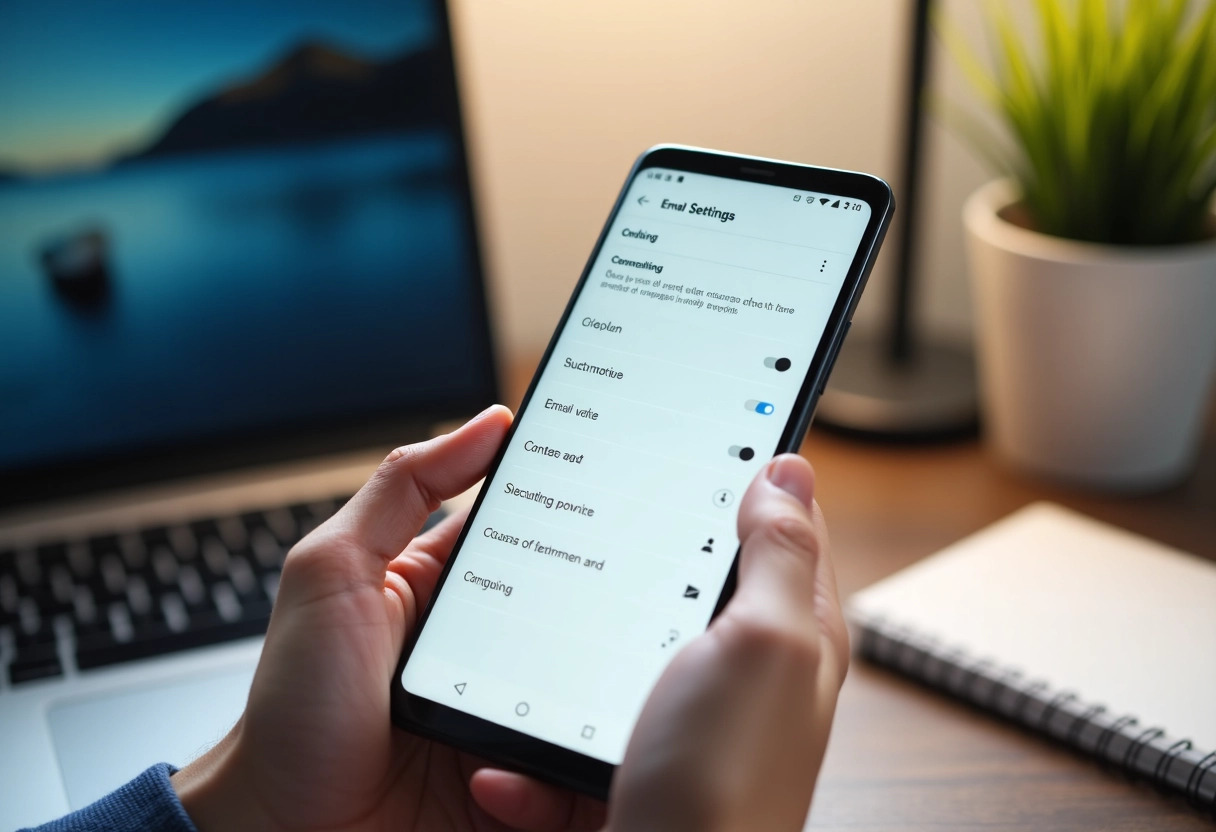
Optimize Your Webmail Usage for Maximum Performance
Two-Factor Authentication and Password
Secure your messaging by enabling two-factor authentication. This feature enhances security by requiring two verification steps when logging in. Also, use a strong and unique password for each email account to minimize hacking risks.
Folders and Automatic Sorting Rules
For optimal organization of your emails, create folders and set up automatic sorting rules. These rules allow you to filter and automatically sort incoming emails into specific folders. For example, work emails can be directed to a dedicated folder, while newsletters can be filtered into another.
Offline Mode and Push Notifications
Offline mode is a fundamental feature for reading and composing emails without an internet connection. Enable it to ensure you can always access your messages while on the go. Set up push notifications to receive instant alerts for every new email. However, be aware that this feature, while convenient, can consume a lot of energy.
Synchronization
Ensure that the synchronization of your messaging is configured correctly. This feature allows your emails to be updated in real-time on your smartphone. Set the synchronization frequency according to your needs to balance message refreshing and battery saving.
By applying these tips, you will improve the performance of your webmail on Android, ensuring smooth and secure management of your electronic communications.