In the heart of the vast expanses of Australia, kangaroos embody the iconic image of a unique wildlife. These fascinating marsupials, recognizable by their bouncing mode of movement, maintain a singular relationship with their environment. Their diet mainly consists of vegetation, adapted to the harshness of the Australian bush. The habitat of kangaroos varies from eucalyptus forests to grassy plains, where they benefit from the resources necessary for their survival. Their social behavior, often overlooked, reveals a complex structure within groups called ‘mobs’, demonstrating sophisticated interactions and an astonishing hierarchy.
Diet and ecological adaptation of kangaroos
What does a kangaroo eat? This frequently asked question finds its answer in the careful observation of the dietary habits of these wild animals. The kangaroo’s diet mainly consists of grasses, leaves, as well as small branches and tree bark. These elements are chosen carefully, reflecting a remarkable ecological adaptation that allows them to survive in often hostile environments.
The red kangaroo, for example, prefers arid areas where water is scarce and temperatures are high. Its feeding behavior illustrates an exceptional ability to regulate its hydration and extract maximum nutrients from available vegetation. This species thus demonstrates resilience in the face of difficult climatic conditions, subsisting on the sparse flora of desert expanses.
In contrast, the giant kangaroo is distinguished by its preference for humid climates and more fertile areas. Inhabiting varied habitats, from savannas to dry forests, this species of kangaroo enjoys a more diverse and abundant diet. This nutritional diversity is a key factor in the impressive size and strength of the animal, once again highlighting the importance of ecological adaptation.
Beyond their diet, the different species of kangaroos exhibit feeding behaviors that reflect environmental intelligence. They manage to learn and adapt to seasonal variations, food resource availability, and even disturbances caused by human activities. This adaptability underscores the complexity of the relationship between kangaroos and their biotope and represents a major challenge for the conservation of these emblems of Australian wildlife.
Habitat, social behavior, and interaction with humans
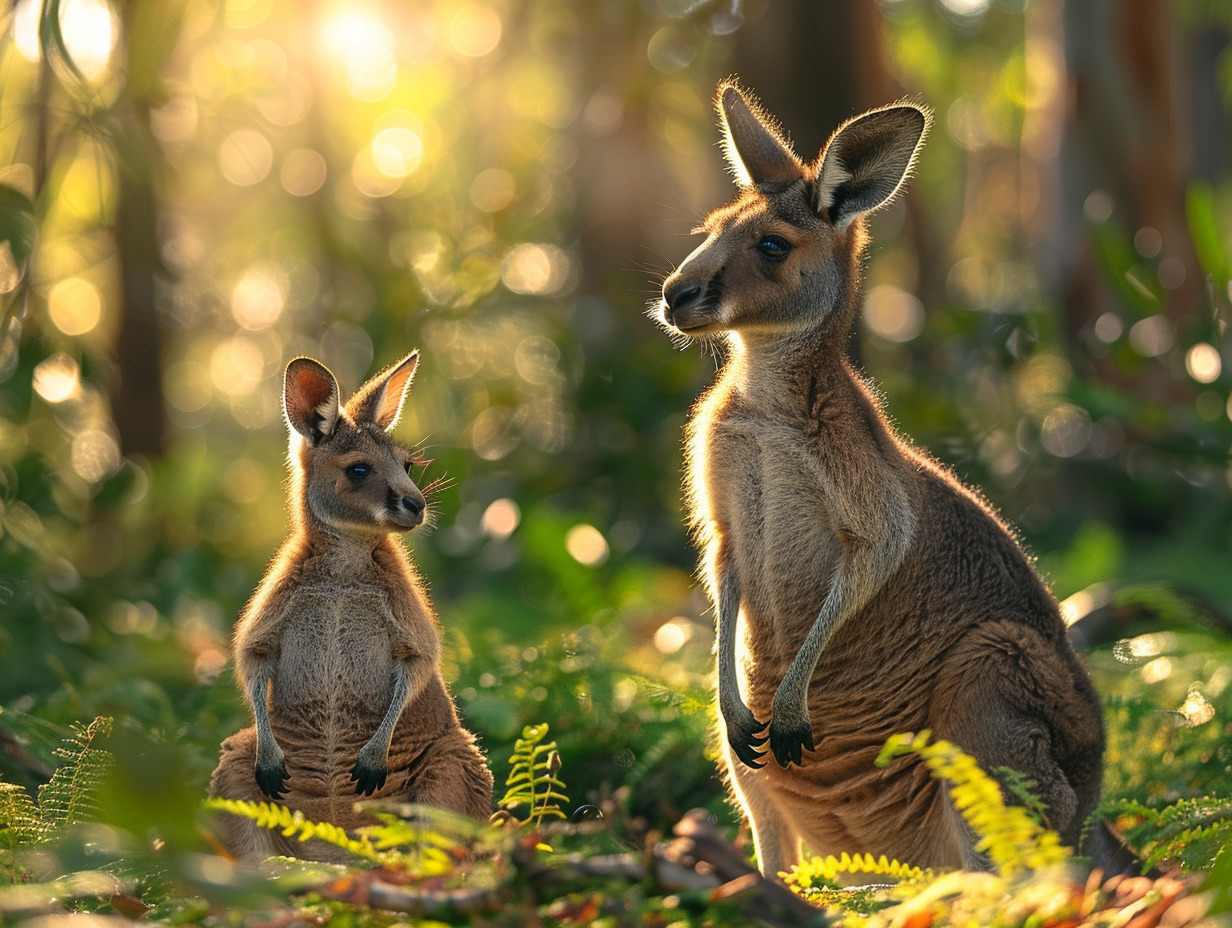
Kangaroos, emblematic of Australian wildlife, occupy a wide range of habitats. From Australia to New Guinea and Tasmania, these marsupials thrive in steppes, savannas, dry forests, and grasslands. This vast geographical distribution reflects their ability to adapt to varied, sometimes extreme, environments. The social structure of kangaroos is equally flexible. Some live in groups called ‘mobs’, where complex interactions and hierarchies prevail, while others adopt a more solitary lifestyle.
The interaction with humans proves to be a determining factor in the existence of kangaroos. The expansion of human activities has led to habitat loss, confronting these mammals with major conservation challenges. In Australia, they are often seen as pests for agriculture, while in other contexts, they become national symbols or even pets. This duality in human perception directly influences management and protection policies for these species.
In light of these challenges, the conservation of kangaroos requires a balance between human development and biodiversity preservation. Conservation initiatives are being implemented to protect the natural habitats of kangaroos and to ethically regulate their population. The challenges are numerous, but the resilience and adaptability of these marsupials offer a glimmer of hope for their harmonious coexistence with humans.